Vasubandhu's Philosophy

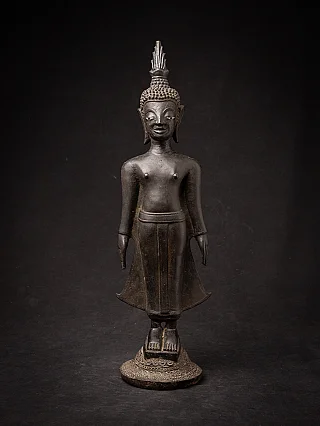
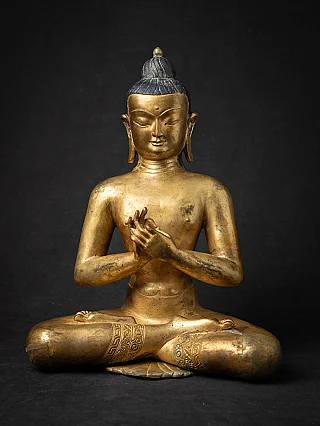
View few of our best Buddha statues
Vasubandhu was an influential Buddhist monk and scholar who have written many influential Buddhist philosophy and texts. He wrote Abhidharma from the perspectives of the Sarvastivada and Sautrantika Schools. He later converted himself into Mahayana Buddhism. He along with his half-brother Asanga and others established Yogacara school.
It is recorded that his text Abhidharmakosakarikaor Commentary on the Treasury of the Abhidharma is widely used in Tibetan and East Asian Buddhism. It serves as the major source for non-Mahayana Abhidharma philosophy. Apart from this text he has written several commentaries, works on logic, argumentation and devotional poetry.
Brief introduction to Vasubandhu's philosophical opinions
Abhidharma
Abhidharma contains a description of all 75 dharma or phenomenal events. It then mentions the entire Sarvastivada doctrine. This doctrine includes meditation practices, cosmology, theories of perception, causal theories, the casus and elimination of moral problems, the theory of rebirth, and the qualities of a Buddha. This text also explains the arguments which relate to the Sarvastivada Abhidharma. It also presents critique over the arguments from a Sautantrika perspective. The major arguments that are included in the Abhidharma are the extensive critique of the Self. It also presents a critique of the Sarvastivada theory of the existence of the dharmas of the three time periods.
Critique of the Self
Vasubandhu's critique of the Self is a defense of Buddhist Anatman doctrine, and also a critique of the Buddhist Personalist School and Hindu view of the soul. This philosophy makes a step to shows the unreality of the self. In order words, it helps to show the person as over and above the five skandhas.
In this text Vasubandhu outlines the soteriological motive for his argument, writing that any beings who view themselves as having independent reality are not conducive to Nirvana.
Vasubandhu evaluates the idea of the self from epistemic grounds or Pramana. He states that the reality can only be known through perception or Inference. He states that perception allows observing directly the objects through six sense spheres while inference allows inferring the existence of sense organs. However, he states that there is no such inference for a solid real self apart from the stream of constantly changing sense perceptions and mental activity of the sense spheres.
Vasubandhu also confirms that the self is made up of constantly changing sensory organs, sense impressions, ideas and mental process and any imagined unity of self-hood is a false projection.
Momentariness
Momentariness is one of the most important issues in the Buddhist philosophy during Vasubandhu's period. Sarvastivadin philosophy believed that the dharmas exist in all three times while Sautrantika held their doctrine of extreme momentariness which believes that the dharmas exist in present moment only. Vasubandhu, in the Abhidharmakosakarika also focuses on the momentariness and critiques the theory of Sarvastivadin. He views that each dharma comes into existence only for a moment. When it existed, it discharges its causal efficacy and then it self-destructs.
Yogacara theories
As Dan Lusthaus mentions, Vasubandhu's major opinions are
Whatever we are aware of, think about, experience, or conceptualize, occurs to us nowhere else than within consciousness.
External objects do not exist.
Karma is collective and consciousness is intersubjective
All factors of experience can be cataloged and analyzed.
Buddhism is a method for purifying the stream of consciousness from contaminations and defilements.
Each individual has eight types of consciousness, but enlightenment requires overturning their basis, such that consciousness is turned into unmediated cognition.
Vijnaptimatra
The Yogacara works of Vasubandhu put forth the theory of vijnaptimatra. This theory has been related to representation-only, consciousness-only, and appearance-only. Some scholars view this theory as explaining the phenomenology of experience while others view it as explaining some form of idealism.
Along with these philosophical views and works, Vasubandhu also worked on three natures and no-duality, and logic. Vasubandhu believes that the absolute or the reality is non-dual. The dichotomy of the perception into perceiver and perceived is actually a conceptual formation. Regarding the Buddhist logic, Vasubandhu is believed to be the founder of the formal logic in the Indian Logico-epistemological tradition. He has contributed to the traditions of dialectical contestability and debate.
Note: FYI, we also manage and sale huge collection of various period and regional Buddhist arts- Buddha statues, Buddha artifacts, etc. Please feel free to visit our online Buddha statues gallery to know more about the Buddha statues.
Share this page